
Home EV charger installation
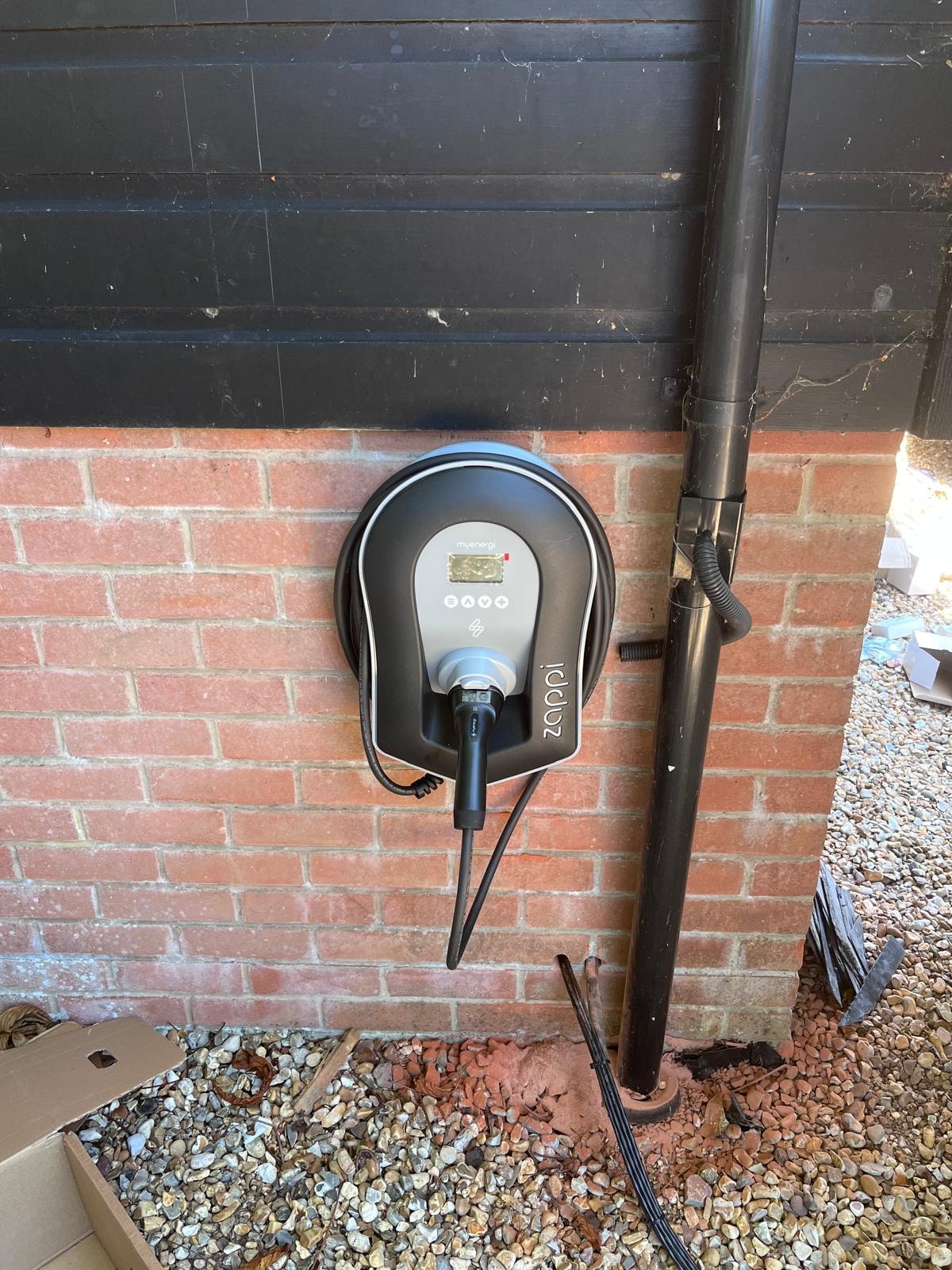
A home EV charger gives you a dedicated 7 kW charging point on your drive or wall, adding around 25 to 30 miles of range per hour, far faster and safer than a three-pin socket. Extract Energy installs smart, solar-aware chargers across Hampshire, handles the grid notification, and processes the current government grants where you qualify.

What you need
Off-street parking
A driveway, garage or allocated space the cable can reach. Up to about 10 metres of surface-mounted cable is included in the standard price.
A suitable electrical supply
Most houses are fine. We check the consumer unit, the earthing arrangement and the main fuse at the survey. Some older installations need a small upgrade first.
Wi-Fi or mobile signal
Where the charger will sit, so it can be smart.
Permission if you rent or live in a flat
Your landlord or freeholder needs to agree.
Chargers we fit
We will recommend a smart charger that suits your tariff and your solar. Smart means it meets the UK smart charging regulations, so it can schedule charging to off-peak hours and respond to tariff signals. You can choose tethered (cable attached) or untethered (socket only). A 7 kW single-phase charger is the standard; 22 kW needs a three-phase supply.
If you have, or are planning, solar and a SigenStor battery, we will recommend a charger that talks to them, so the car charges from surplus solar in the day and from the cheap night rate otherwise. SigenStor can also take an optional DC charging module that charges the car directly from the panels and battery.
EV charger grants in 2026
The grant picture has changed a lot since the old homeowner scheme closed in 2022, and a lot of websites are still out of date. As of October 2026, run by the Office for Zero Emission Vehicles (OZEV):
| Grant / scheme | Amount | Who qualifies | Eligible? |
|---|---|---|---|
| OZEV EV Chargepoint Grant — renters & flat owners | Up to £350 | Renters or flat owners with dedicated off-street parking | Yes |
| OZEV EV Chargepoint Grant — homeowners | Not available | Owner-occupiers in houses — grant removed April 2022 | No |
| OZEV EV Infrastructure Grant — blocks of flats | Up to £30,000 | Landlords or management companies installing multiple chargers in a block | Yes |
| Workplace Charging Scheme | Up to £350 per socket (max 40) | UK businesses, charities and public sector bodies | Yes |
The grant is claimed through an authorised installer, and the charger must be on the approved list. Grant rules change; this section was accurate in October 2026 and we update it when they do.
Installation process
Survey
Where the charger goes, cable route, consumer unit, earthing, main fuse rating, and your eligibility for a grant.
Quote
Written, with the grant deducted where it applies.
DNO notification
Chargers must be notified to your network operator; above certain loads they need approval. We do it.
Install
Usually half a day. Dedicated circuit from the consumer unit, protective device, cable run, charger mounted and connected, tested.
Demo and paperwork
We show you the app, set up your schedule, and hand over the electrical certificate and any grant paperwork.
Charging from solar and battery
An electric car is the biggest single load most households will ever add. Charging it from your own roof turns the economics of solar around: an extra 8 to 10 kWh a day of self-consumption in summer is exactly what a car can soak up. In winter, the battery fills from a cheap overnight tariff and the car charges from the same window. We design the three together when we can.
Landlords and multiple properties
The landlord grant, at up to £500 per socket and up to 200 sockets a year, makes EV charging one of the easier upgrades to justify across a portfolio. We survey and install across multiple properties with one point of contact, and we will confirm at the quote stage whether the grant can be claimed on the job.
Landlords and housing associationsCost
Guide price for a 7 kW smart charger supplied and installed, with a standard install of up to about 10 metres of cable: from £950, typically £1,000 to £1,350, before any grant. VAT on EV charger installation is standard-rated at 20%, and the price includes it.
Extra cable, groundworks, a consumer unit upgrade, three-phase and supply upgrades are quoted separately. Where a grant applies, it comes off that figure. The written quote after your free survey is the one that counts. Prices as at October 2026.
Frequently asked questions
Can I get a grant for a home EV charger?
If you rent, own a flat, or are a landlord: yes, 75% up to £500 per socket under the OZEV chargepoint grants, provided the installer is authorised for the scheme. If you own a house with a driveway: no, there is no current grant. We will confirm at the quote stage whether a grant applies to your job.
How long does installation take?
Half a day for most homes. Longer cable runs, groundworks under a drive, or a consumer unit upgrade can take it to a full day.
Tethered or untethered?
Tethered has the cable attached, so you just plug in. Untethered has a socket and you use your own cable, which is tidier and future-proof if you change cars. Most people with one car choose tethered. We fit both.
Do I need a three-phase supply?
No. Nearly all homes are single-phase and a 7 kW charger is the right fit. 22 kW chargers need three-phase, which is rare in houses and expensive to add. Most cars cannot take 22 kW AC anyway.
Can my charger use my solar?
Yes, with a solar-aware charger or the optional SigenStor DC module. The charger watches your export and diverts surplus solar into the car instead of to the grid. On a sunny day you can add a decent amount of range for free.
Book a free EV charger survey
We will check your supply, your parking and your grant eligibility, and quote in writing.