
Cavity wall insulation removal and extraction
Cavity wall insulation removal, or extraction, is the process of taking failed fill out of the gap between the two leaves of a wall. Bricks are removed at the base of the wall to create extraction points, compressed air loosens the material, and a specialist vacuum draws it out, leaving the cavity clear so the wall can dry.
We have been doing this since 2013. It is how the company started, it is still a big part of what we do, and it is why Scott designed and built our own machine to do it. If your house has cavity wall insulation and it has damp, mould or cold walls that were not there before, you are in the right place.
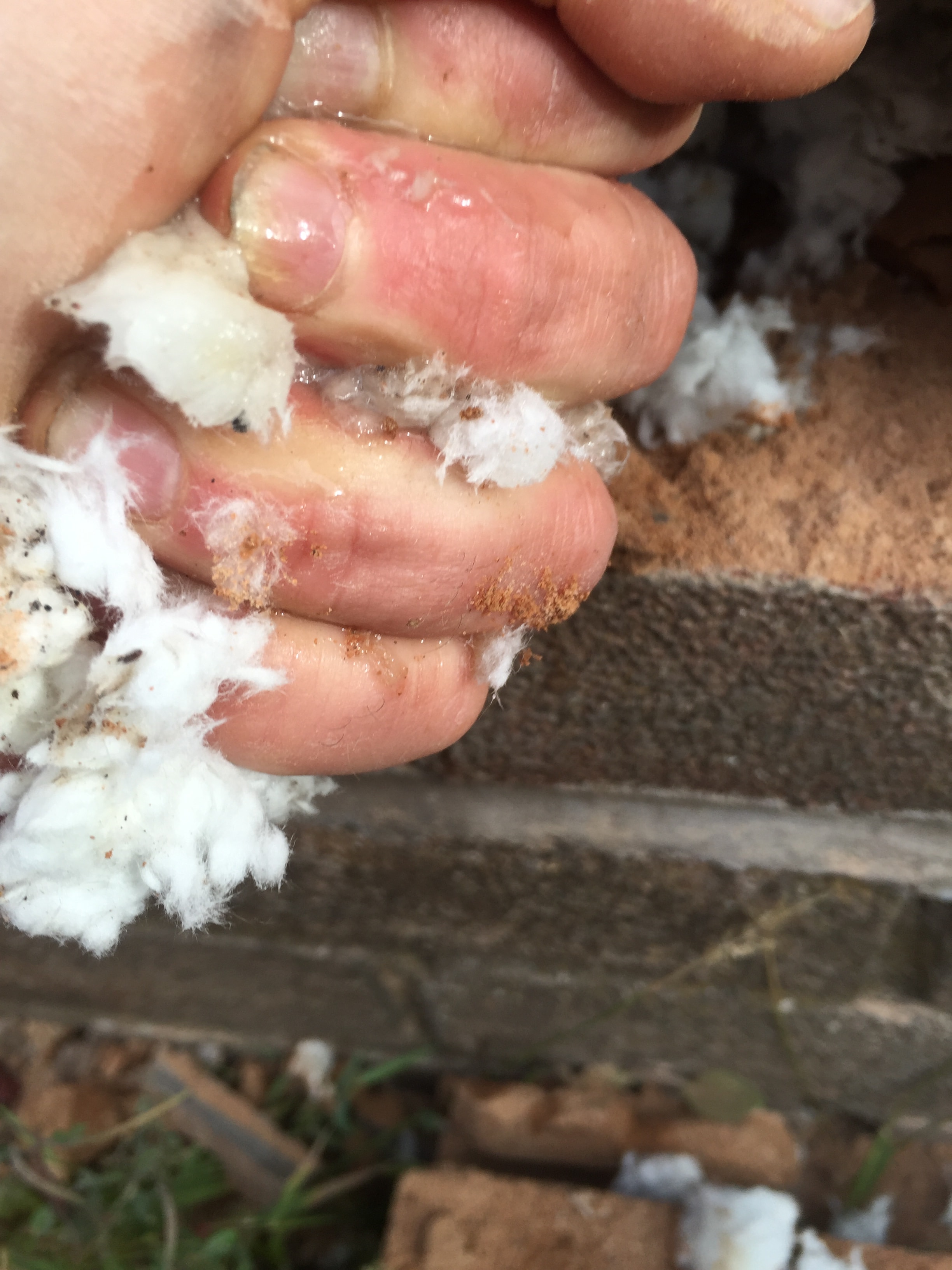
Signs your cavity wall insulation has failed
Failed fill rarely announces itself. The symptoms creep in over a couple of winters and get blamed on condensation, old windows or "the house just being cold". Here is what to look for:
Damp patches that follow the weather
A patch on an upstairs external wall that darkens a day or two after heavy rain and fades in a dry spell is the classic sign. Water is crossing the cavity on wet insulation.
Mould in the top corners of rooms
Especially on walls facing south-west, where the rain comes from. Also behind wardrobes and beds pushed against external walls.
Cold spots
Put the back of your hand on an outside wall and move it around. If one area is noticeably colder, the fill has slumped or there is a void. A thermal camera makes this obvious.
Tide marks and efflorescence
White salts or a brown line on the inside face of a wall.
Peeling paper and flaking paint
On external walls only, not internal ones.
A musty smell
In a room that is otherwise clean.
Rot or a bouncy floor downstairs
Where fill has blocked the airbricks that ventilate the void under a timber floor.
Bills that went up, not down
In the years after the insulation went in.
Fibres or beads at the airbricks
Outside, or around a cable entry.
Two or more of these together and it is worth a borescope survey. We will see exactly what is in the cavity within ten minutes of arriving.
Why cavity wall insulation fails
A cavity does one job: it stops water that gets through the outer brick from reaching the inner wall. Rain soaks the outer leaf, runs down its inside face, and drains out at the bottom. The inner leaf stays dry. Fill the gap with something that holds water and you have built a bridge. The main ways it goes wrong:
Wet fill
Mineral wool and urea-formaldehyde foam soak up water like a sponge. Once saturated, they press against the inner leaf and the damp moves straight through. Wet mineral wool also loses most of its insulating value, so you get the damp and the cold together.
Slumping and voids
Mineral wool settles over time, leaving a gap at the top of the wall and a dense, wet mass at the bottom. Foam shrinks as it ages. Poor drilling patterns or low injection pressure leave voids from day one. Every void is a cold spot, and cold spots are where condensation forms.
Rubble and mortar snots
Many cavities were never clean. Builders dropped mortar and brick offcuts down them in the 1930s and have never stopped. Debris sitting on wall ties bridges the gap on its own; add wet insulation and it is worse.
The wrong house
Timber-framed and steel-framed houses have a cavity that must stay ventilated. They should never be filled. A surprising number were.
Exposure
Building regulations put the country into four wind-driven-rain zones. The Solent coast, Portsmouth, Hayling Island, Gosport and the Isle of Wight sit in a higher exposure band than inland Hampshire. A west-facing wall in Southsea takes far more water than the same wall in Basingstoke. Full-fill mineral wool in those walls was always a gamble, and in the rush of government-funded schemes in the 2000s and 2010s a lot of gambles were taken.
Blocked vents
Fill pushed down past the damp-proof course blocks the airbricks that keep a suspended timber floor dry. Joists rot from the ends.
Wall tie corrosion
Damp fill against steel wall ties speeds up rusting. Rusting ties expand and crack the mortar joints in horizontal lines. Replacing them needs a clear cavity, so extraction often comes first.
The twelve reasons we are asked to remove cavity wall insulation
Which materials we remove
Mineral wool (fibre)
Blown glass wool or rock wool. The most common fill from the 1980s to the 2010s and the one that fails most often when wet.
EPS bead (loose or bonded)
Polystyrene beads. Loose beads pour out when a wall is opened; even bonded bead sometimes has to come out for wall-tie work or refurbishment.
Urea-formaldehyde foam
Injected in the 1970s and 80s. Shrinks, cracks and turns to powder. Can release formaldehyde odour when damp.
Polyurethane and other foams
Less common; harder to remove but it can be done.
Flood or fire-damaged fill
Of any type, plus the silt and soot that comes with it.
Rubble and debris
That has been in the cavity since the house was built.
If you are not sure what you have, do not worry. The borescope will tell us, and we have taken all of it out before.
How we remove cavity wall insulation, step by step
Free survey and diagnosis
We drill a 10mm hole in a discreet spot, put a borescope camera in, and look. You see the screen too. We note the fill type, how wet it is, the cavity width, the state of the wall ties and whether there is debris. We check airbricks, flues and gas appliances, because cavity work can affect them. You get a written quote with the scope spelled out.
Site preparation
On the day the van arrives with the Extract Vac system, a compressor, sheeting and brushes. We sheet up the pavement and any planting, protect the doors and windows, and cover vents inside. If your meter box or boiler flue is on a wall we are working on, we isolate and check them first. You can stay in the house; it is noisy but safe.
Opening the extraction points
We remove single bricks at damp-proof course level at intervals along each wall, and drill a pattern of small holes higher up. The bricks come out whole and are kept to go back in.
Extraction
Compressed air is fed through the upper holes to loosen and agitate the fill. The Extract Vac draws the material out through the openings at the bottom into sealed bags. Fibre comes out as a grey slurry if it is wet; beads pour; old foam comes out as dust and chunks. We work wall by wall, top to bottom, so nothing is left sitting on ties or lintels. We clear the airbricks and fit cavity brushes where the cavity meets the loft or an opening.
Inspection
The borescope goes back in at several points on each wall to confirm the cavity is clear, right down to the DPC. If we find a pocket, we go back for it. Only when we are satisfied do we start closing up.
Making good
The bricks go back in and are pointed with mortar colour-matched to the existing. The drill holes are filled the same way. From the pavement a week later you would struggle to find them. We replace or clear the air vents and re-check gas appliances and flues. The Gas form and Post Extraction form are completed and uploaded before the job is signed off.
Waste and tidy-up
Everything that came out of the wall leaves in our van under our Environment Agency waste carrier registration (CBDU532168) and is disposed of legally. We sweep up, take the sheeting away and walk round with you.
A typical three-bed semi takes a day. A larger detached house, or very wet fibre, can run to two.
What happens after extraction
The wall needs time to dry. How long depends on how wet it was and the season; a few weeks in summer, a few months in winter. During that time you will usually see the damp patches inside stop spreading and begin to fade. Mould can be treated once the wall is dry. After that, you have a choice:
Leave the cavity clear
This is the right answer for exposed walls in poor condition, timber or steel frames, and anyone who simply does not want insulation in there again. The house goes back to how it was built.
Re-insulate with bonded bead
Once the cavity is dry and we have confirmed the wall is suitable, we can fill it with ThermaBead bonded EPS bead. It does not hold water, it drains, and it comes with a 25-year IAA guarantee. Most customers who had mineral wool fail go this route and end up warmer than they were with the original fill.
We will give you an honest view on which is right for your house. We do not push the re-fill.
Bonded bead cavity wall insulation installation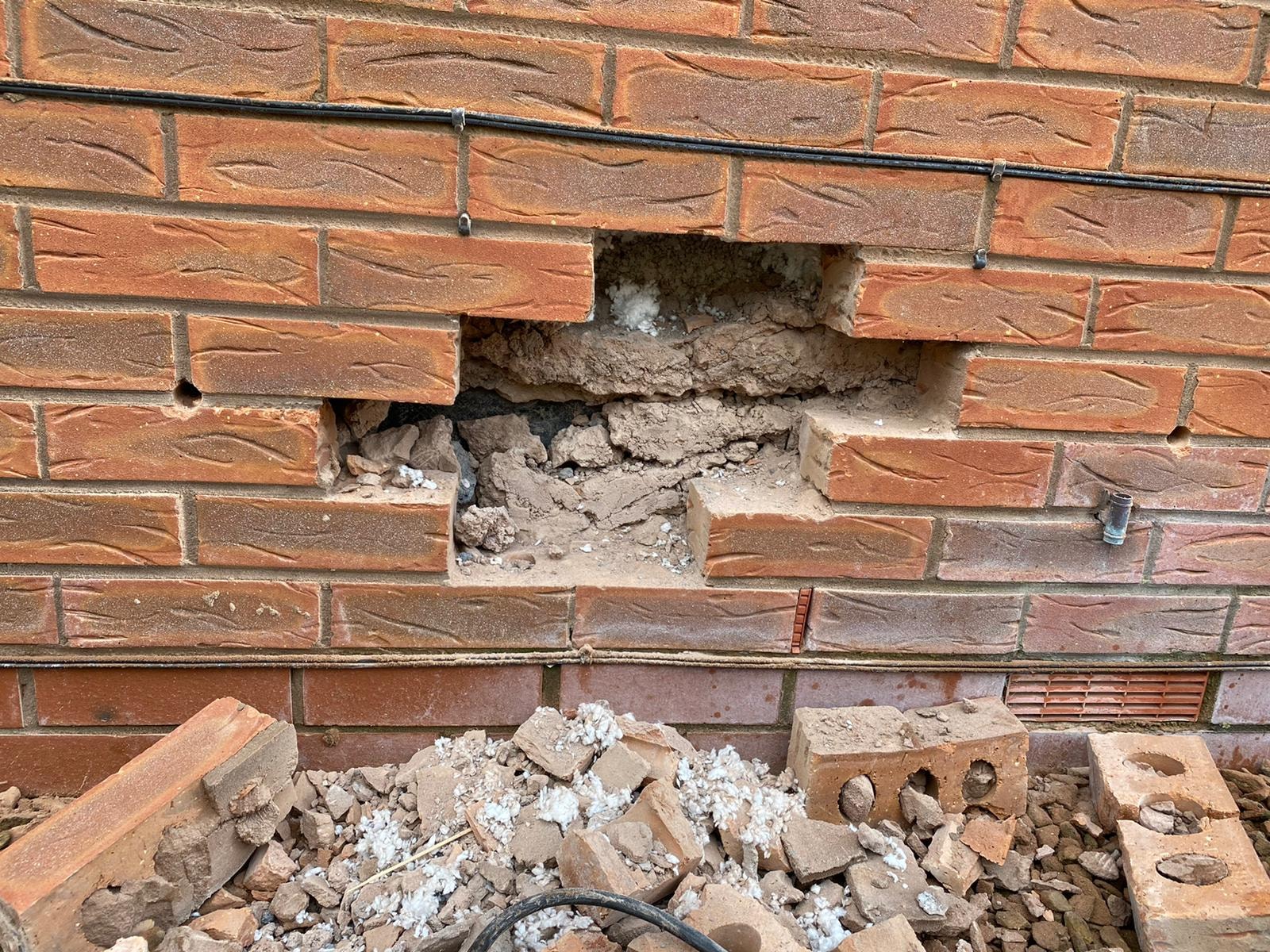
Your photo evidence pack
We photograph every extraction job from start to finish, and the photo pack is available to you on request. It is there for your records, for a surveyor, a mortgage lender, an insurer, or a guarantee claim. It includes:
- All elevations before we started
- All elevations after making good
- The loft and any cupboards where the cavity is visible
- The empty cavity, photographed through the extraction points
- The debris and fill removed, from a distance and close up
- The colour-matched pointing
- Cavity brushes fitted
- Air vents cleared or replaced
- Boiler, flue and any other burning appliance before and after
It is also the pack we use for our own quality checks, so nothing gets signed off without it.
How much does cavity wall insulation removal cost?
These are guide prices for extraction only. They include VAT at 20%, because removal on its own is standard-rated.
| House type | Guide price (inc. VAT) |
|---|---|
| 2-bed terrace | £1,200 to £1,700 |
| 3-bed semi-detached | £1,300 to £2,000 |
| 3-bed detached bungalow | £1,000 to £1,500 |
| 4-bed detached | £2,200 to £3,000 |
For context, Checkatrade's published figures for cavity wall insulation removal in Hampshire show an average of £1,929 and a range of £1,427 to £2,631 (October 2026). Those are other firms' prices, not ours.
What moves the price:
- •Wall area. It is mostly a per-square-metre job.
- •Material. Wet fibre is slow and heavy; bead is quick; old foam is somewhere between.
- •Access. Conservatories, extensions, shared walls and tight side passages all add time.
- •Scaffolding or a tower for gables on three-storey houses.
- •Making good on render or painted walls rather than bare brick.
- •Wall-tie work, cladding or flood damage make a job harder and the price rises with the difficulty.
Re-filling afterwards is a separate line on your quote. Bonded bead installation is priced from the price guide, and VAT on that part is 0% until 31 March 2027, then 5%. Final price is always confirmed in writing after the free survey.
Full insulation price guideGuarantees, CIGA and claims
If your insulation was installed under a government scheme, you may have a 25-year guarantee from CIGA, the Cavity Insulation Guarantee Agency, or an insurance-backed guarantee from another body. The paperwork is often lost, so check with the previous owner, your solicitor's pack, or CIGA directly with your address.
The usual order of events: contact the original installer, if they still exist. Many do not. Contact CIGA (or the guarantee provider). They may send an assessor. If the claim is accepted, the guarantee provider may fund remedial work. If it is refused or the firm has gone, you are paying for the extraction yourself.
A few honest notes. Removal is rarely grant-funded; the Warm Homes: Local Grant and similar schemes fund installing insulation, not taking it out. Claims-management firms advertise "no win, no fee" cavity wall compensation; outcomes vary a great deal and fees can be high. We are happy to provide the survey findings and photo pack to support a legitimate claim.
One point on terminology. If we re-fill your cavity, the guarantee that comes with it is an IAA Able To Pay guarantee, issued through the Insulation Assurance Authority. It is separate from any CIGA certificate that came with your original installation.
What customers say about extraction
"First class service from start to finish, survey carried out the day after an enquiry was made, a thorough inspection of the cavity wall with a camera. Work personnel were extremely efficient and performed a difficult job between two houses with very limited access, which a previous company arrived to do and turned away saying it was not possible. The work was completed in a relatively short time, half a day, very tidy, leaving no trace of any cavity wall insulation around the garden."
Referenceline and Google review, June 2026
"I can't recommend more highly. Had initial problems with previous company but over the phone and indeed at my home they made my life easier and sorted everything the previous company couldn't."
Steven B, Hampshire
"Great service. I wouldn't choose anyone else to help sort my damp in my house. Having asthma doesn't help either, so Extract Insulation Limited turned into a real life saver!"
LyL, Hampshire
Frequently asked questions
How much does it cost to remove cavity wall insulation?
Typically £1,200 to £1,700 for a two-bed terrace, £1,300 to £2,000 for a three-bed semi, £1,000 to £1,500 for a three-bed detached bungalow and £2,200 to £3,000 for a four-bed detached, including VAT. The material, access and the amount of making good are what move the figure. There is a full breakdown on our price guide, and the final price is confirmed in writing after the free survey.
How long does extraction take?
One day for most three-bed houses, two for larger or very wet jobs. If you are re-insulating afterwards, that is a separate visit once the cavity has dried, usually a few weeks later.
Is it messy?
Outside, yes, for the day. There is noise from the compressor and the vacuum, and dust from drilling. We sheet everything and clear up fully. Inside the house there is very little disruption; the work is all done from the outside, and we cover internal vents to stop dust coming through.
Can you remove cavity wall insulation yourself?
Not safely or completely. The fill has to be loosened with compressed air and drawn out with a high-powered vacuum through controlled openings, and you need to confirm with a camera that the cavity is actually clear. Half-removed fill is worse than fill left alone, because it leaves wet pockets on wall ties. It is specialist work with specialist kit.
Will removing it make my house colder?
Slightly, in the short term, if the fill was dry and doing its job. But fill that is wet enough to cause damp is not insulating much anyway; wet mineral wool loses most of its thermal value. Most customers find the house feels drier and no colder, and if the wall is suitable we can re-insulate with bonded bead once it has dried.
Can I get a grant to remove cavity wall insulation?
Almost never. Government schemes pay to install insulation, not to remove it. The exceptions are guarantee claims (CIGA or insurance-backed) where the original installation is proven faulty. See the guarantees section above.
Will my mortgage lender or surveyor want it removed?
Increasingly, surveyors flag cavity wall insulation where there is evidence of damp, and some lenders ask for a specialist report. We can give you the borescope findings and photos to pass to your lender or surveyor. If removal is recommended, the photo pack we take documents the work.
Do you remove foam as well as fibre?
Yes. Urea-formaldehyde foam from the 1970s and 80s comes out as dust and fragments; it takes longer than fibre but we have done it many times. We also remove polyurethane foam, loose and bonded EPS bead, and flood-damaged fill.
Do you check gas appliances and flues?
Yes, before and after. Cavity work near a boiler flue or a gas meter has to be done carefully, and our process includes a gas appliance check and a signed Gas form on every job. It is one of the things that separates a specialist from a general builder.
What happens to the waste?
It leaves in sealed bags in our van and is disposed of at a licensed facility under our Environment Agency waste carrier registration, CBDU532168. Nothing is left in a skip outside your house.
Can you re-insulate afterwards?
Yes, once the cavity has dried and we have confirmed the wall is suitable. We install ThermaBead bonded EPS bead, which does not absorb water and carries a 25-year IAA guarantee. We will also tell you if your house is one where the cavity is better left empty.
Book a free borescope survey
We will put a camera in the cavity, show you what is there and give you a written quote. No charge, no pressure.