
Home insulation services in Hampshire
Extract Energy installs, removes and replaces cavity wall and loft insulation across Hampshire and the South Coast. We are TrustMark registered and have specialised in extraction since 2013, so we know what works in a damp, windy coastal climate and what does not. Every job starts with a free survey and an honest answer.
Which insulation does your home need?
Heat leaves a house through every surface, but not evenly. In an uninsulated home, the Energy Saving Trust puts roughly a third of the loss through the walls and about a quarter through the roof. The rest goes through floors, windows and draughts.
That order matters when you are deciding where to spend money. If your loft has less than 100mm in it, that is usually the cheapest fix with the quickest payback. If your walls have a cavity and nothing in it, filling it properly makes a bigger difference to how the house feels, especially in rooms on the windward side.
And if your walls already have insulation in them and the house is still cold and damp, the problem may be the insulation itself. That is the job we are best known for.

Cavity wall insulation
Most houses built from the 1930s onwards have two leaves of brick with a gap between them. Filling that gap with the right material, in the right house, cuts heat loss noticeably. Filling it with the wrong material, or in a house that was never suitable, causes damp.
We do both sides of that story. We remove failed fill with the Extract Vac machines we build ourselves, and we install ThermaBead bonded EPS bead, which does not absorb water and comes with a 25-year IAA guarantee.
Loft insulation
The current recommended depth is 270mm of mineral wool. Many Hampshire homes we visit have 100mm or less, often flattened, sometimes wet from a roof leak or contaminated by mice. We top up, or strip out and replace, and we always deal with ventilation at the eaves and insulate the pipes and tank at the same time, because a well-insulated loft gets colder and those pipes need protecting.
If you use the loft for storage, we fit raised boarding on legs so the boxes sit above the insulation rather than squashing it.
Insulation removal: when and why
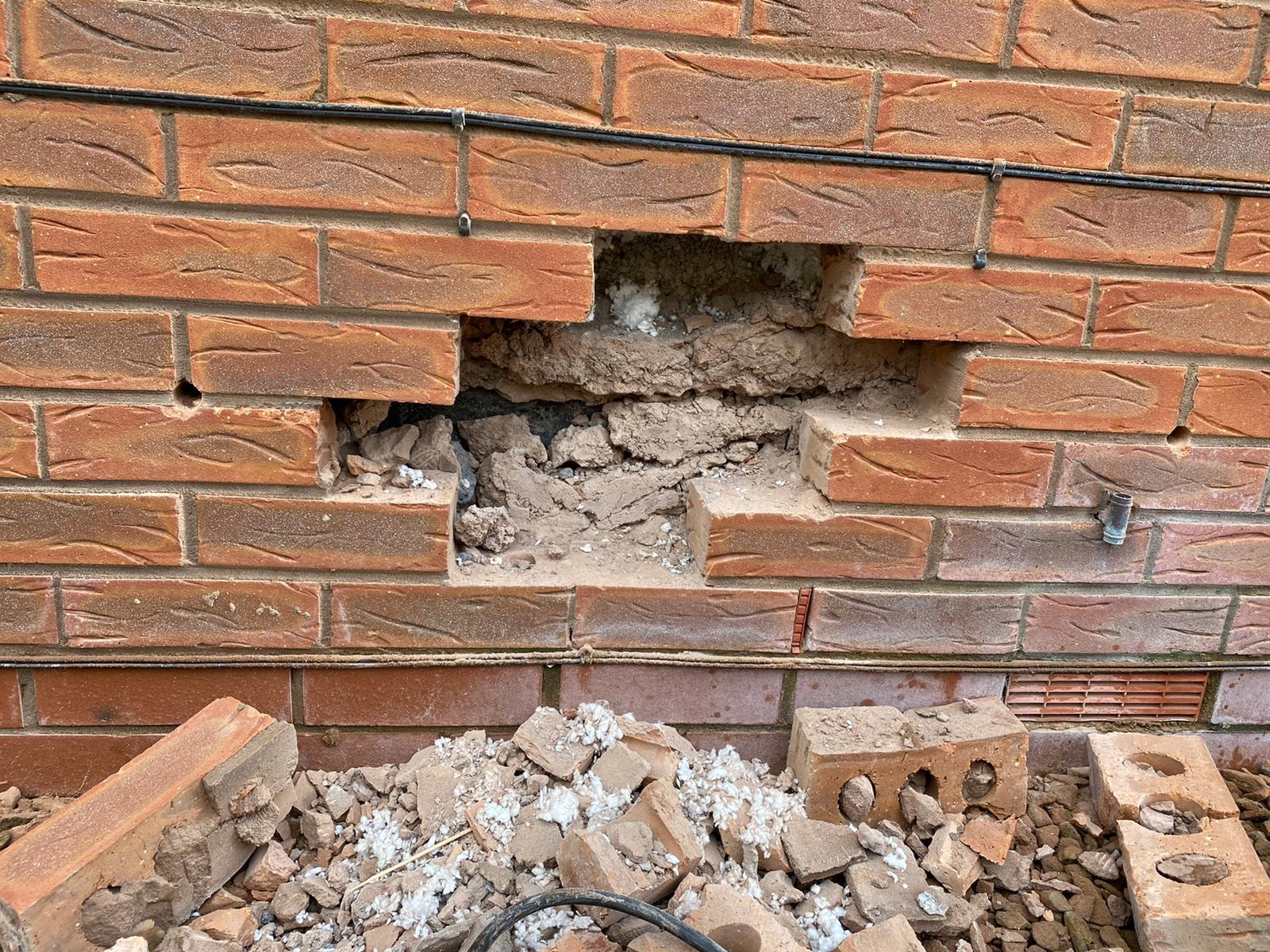
Insulation does not last forever, and some of it should never have been fitted. The usual reasons we are called to take it out:
- Cavity fill that has got wet and is tracking damp into the house
- Mineral wool that has slumped, leaving cold voids at the top of walls
- Urea-formaldehyde foam from the 1970s and 80s that has shrunk and crumbled
- Fill in a timber-framed or steel-framed house, where it should never have gone
- Loft insulation that is wet, compressed, or full of droppings
- Spray foam in the loft that a mortgage lender or surveyor has flagged
- A clear cavity needed for wall-tie replacement or a refurbishment
Removing it is messy, noisy work that takes a day or two. We protect the house, extract the material with sealed vacuum equipment, dispose of it under our Environment Agency waste carrier registration (CBDU532168), and leave you a photo pack showing what came out and what the cavity or loft looks like now.
What makes us different
We came into this trade from the repair end. We started in 2013 as removal specialists, because of the problems caused by poorly fitted cavity wall insulation, and added installation once we understood exactly why installs fail.
That history shows up in small ways. We will not fill a cavity we have not looked inside. We check gas appliances and flues before and after cavity work. We photograph every elevation before we start and after we finish. We turn down jobs where the house is not suitable, and we tell the customer why.
It also shows up in the equipment. The Extract Vac system that comes off our van was designed in Gosport by us and is sold to other insulation contractors around the UK.
Prices and funding
We publish price ranges because we think you should know roughly what you are looking at before anyone comes round. Have a look at the insulation price guide for cavity wall removal, bonded bead installation, loft insulation and boarding.
VAT on insulation installed in your home is 0% until 31 March 2027. After that it goes back to 5%.
Some households qualify for fully funded insulation through the council-run Warm Homes: Local Grant. Our guide explains who qualifies and how the process works.
Frequently asked questions
What type of walls do I have?
Look at the brick pattern on an outside wall. If every brick is laid lengthways and the pattern is regular, you almost certainly have a cavity wall. If you can see the short ends of bricks mixed in with the long sides, the wall is probably solid. Cavity walls are usually 260mm to 300mm thick; measure at a window or door opening. Houses built before about 1920 are normally solid. If you are not sure, we will check during the free survey.
Can insulation cause damp?
Insulation that is installed correctly in a suitable house does not cause damp. Insulation that gets wet, bridges the cavity, blocks airbricks or goes into an exposed wall in poor condition absolutely can. That is why the survey comes first, and why we chose a bead system that does not hold water.
How long does insulation last?
Loft insulation, kept dry and uncompressed, lasts around 40 years. Bonded bead cavity wall insulation carries a 25-year IAA guarantee and should outlast that. Mineral wool and foam cavity fill from the 1980s to 2010s has a more mixed record, which is why we remove so much of it.
Is there a grant?
Sometimes. The Warm Homes: Local Grant can fully fund insulation for eligible households in England, but it is run by the council and they appoint the installer. Removal of failed insulation is rarely funded. Our Warm Homes guide sets out the rules honestly.
Not sure what your house needs?
Book a free survey and we will look at the walls, the loft and the ventilation together, then tell you what is worth doing and what is not.