Solar panel installation in Hampshire
Solar PV panels convert daylight into electricity for your home. Extract Energy designs and installs solar systems across Hampshire, from a free survey of your roof and your bills through to commissioning and your MCS certificate. We are MCS certified via The IAA, so your system qualifies for Smart Export Guarantee payments.
How solar works for a typical South Coast home
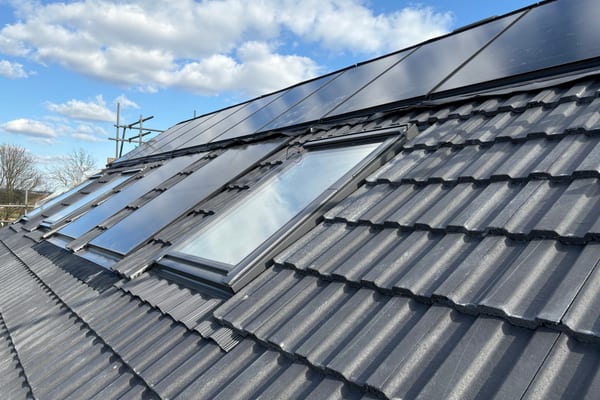
Panels on the roof produce DC electricity whenever there is daylight, not just sunshine. An inverter turns it into the AC your house uses. Your appliances take what they need first. Whatever is left either charges a battery, if you have one, or flows out to the grid and earns you an export payment.
The south of England gets more sun than most of the country, and the Solent coast does well for a simple reason: fewer hills and less shading. A 4 kWp system on an unshaded south-facing roof in Hampshire will typically generate about 3,800 kWh a year. That is our estimate; the figure for your roof comes from the MCS design software and depends on direction, pitch and shading. It is a good share of what a typical household uses in a year, but not at the times you use it, which is where a battery comes in.
Is my home suitable?
We check five things at the survey:
Orientation
South is ideal. South-east and south-west lose very little. East and west roofs are still worth doing, especially split across both faces, and pair well with a battery because they spread generation across the day.
Shading
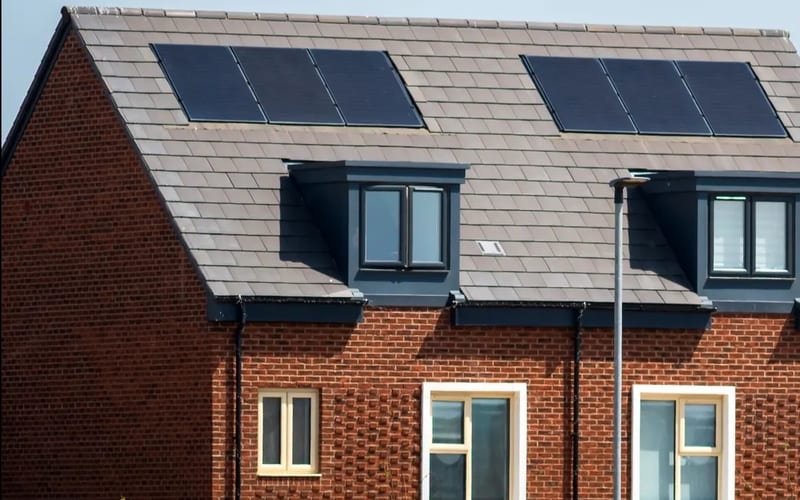
Chimneys, dormers, trees, the neighbour's extension. Partial shade on one panel used to drag the whole string down; modern optimisers and the inverter design we use handle it far better. We still design around it.
Roof type and condition
Tiles, slate and flat roofs are all fine with the right fixings. If the roof needs work, do it first; nobody wants to lift panels off in five years to re-tile.
Space
A typical panel is around 1.7m by 1.1m and gives 400 to 450 watts. Ten panels need roughly 20 square metres of clear roof.
The electrics and the grid
We look at your consumer unit and your supply, and we notify your network operator (the DNO) before installing. Systems above 3.68 kW per phase need the DNO's approval first; we handle that application.
Listed buildings and some conservation areas need planning consent. Everything else is normally permitted development.
What a system costs and what it saves
Guide prices, supplied and installed. VAT is 0% until 31 March 2027, then 5%.
| System | Guide price (0% VAT) |
|---|---|
| 3 to 4 kWp panels only (about 7 to 10 panels) | from £5,500, typically £5,800 to £7,500 |
| 4 to 6 kWp panels only (about 10 to 14 panels) | from £6,800, typically £7,200 to £9,500 |
| 3 to 4 kWp plus about 6 kWh battery | from £9,500, typically £10,000 to £12,500 |
| 4 to 6 kWp plus about 12 kWh battery | from £12,000, typically £12,500 to £16,000 |
Scaffolding, roof complexity and the inverter spec move the price. The written quote after your survey is the one that counts. Prices as at October 2026.
Estimated savings
Take a 4 kWp system on a south-facing, unshaded Hampshire roof generating about 3,800 kWh a year. Say you use 40% of that in the house (1,520 kWh) and export the rest (2,280 kWh). At about 26p per kWh for electricity from the grid and 12p per kWh for export, that is about £395 saved plus £274 earned: roughly £670 a year. If a battery lifts your own use to about 70%, the same system comes out nearer £830 a year.
Payback period
At those figures, panels on their own take roughly 9 to 11 years to pay back, in line with the Energy Saving Trust's published range. A battery adds more to the price than it adds to a flat-rate saving, so payback with a battery is longer. The case for one is stronger on a cheap overnight tariff, or if you want backup in a power cut. We work it out from your real bills at the survey and show you the assumptions. If solar does not stack up for your house, we will say so.
Smart Export Guarantee explained
The Smart Export Guarantee (SEG) obliges larger energy suppliers to pay you for the electricity you export. Three things you need:
An MCS-certified installation (that is us).
A smart meter that can record export.
An SEG tariff with a supplier. It does not have to be your import supplier, and rates vary a great deal: around 12p is typical, some are as low as 4p, and the best published rates have been as high as 20p. We will point you to the current best options when we commission your system.
Export payments are nice to have. Using your own electricity instead of buying it is where the real saving is.
MCS certified via The IAA
Our MCS certificate covers solar PV (MIS 3002), battery installation (MIS 3012) and the MCS pre-sale information requirements (MCS 032). Every installation is registered and you receive a certificate.

Our design and install process
Free survey
We use our solar and battery survey form to record the roof, the consumer unit, the meter, the supply, shading and your usage. We ask for a year of bills or your smart meter data.
Design and quote
A system sized to your usage, not to your roof. Panel layout, inverter and battery spec, estimated generation and self-consumption, a written quote and the MCS performance estimate.
DNO notification or application
We notify your network operator, or apply for approval if the system needs it, before any work starts.
Scaffold
Erected a day or two before the install and taken down a day or two after.
Install
Roof anchors into the rafters, rails, panels, and the DC cabling down to the inverter. Inverter and any battery mounted (usually garage, utility or loft). AC connection into your consumer unit with its own protection. Typically one to two days.
Commissioning and handover
We test, commission, set up the monitoring app, show you how to read it, and register the system with MCS. You receive the MCS certificate, electrical certificate, DNO confirmation and the handover pack, all of which you will need for SEG and when you sell.
Add a battery
Most of our solar customers add a Sigenergy SigenStor battery at the same time, because the maths usually works out better: more of your own solar used, and the option of a cheap overnight tariff in winter. The SigenStor includes the hybrid inverter, so adding a battery does not mean a second box on the wall.
Home battery storageCharge your car from the sun
If you have, or are planning, an electric car, a smart charger connected to your solar and battery lets you top up from your own generation in the day and cheap grid power at night. SigenStor can take an integrated DC charging module.
Home EV charger installationGrants and loans
Eligible low-income households can get fully funded solar through the Warm Homes: Local Grant, which councils run and which currently has a waiting list in our area. Low-interest Warm Home Loans for homeowners of any income are being rolled out region by region under the Warm Homes Plan. Terms and availability vary, so ask us what is live where you are. We do not offer finance ourselves at the moment.
Warm Homes: Local Grant guideFrequently asked questions
How many panels do I need?
Enough to cover your usage, not your roof. A three-bed household using around 3,500 to 4,000 kWh a year is typically well served by 8 to 10 panels of 400 to 450 W. We size from your bills.
Do solar panels work on cloudy days?
Yes, at reduced output. Panels respond to daylight, not direct sun. A grey day in Portsmouth still produces a useful amount; a bright winter day produces more than people expect. Annual figures are what matter, and the south coast does well on them.
Do I need planning permission?
Usually not. Roof-mounted solar on a house is normally permitted development, provided panels do not stick up more than 200mm from the roof surface. Listed buildings always need consent and conservation areas sometimes do. We will check for you.
What is MCS and why does it matter?
The Microgeneration Certification Scheme certifies installers and products for small renewables. Without an MCS certificate you cannot claim Smart Export Guarantee payments and most finance and grant schemes are closed to you. We are MCS certified through The IAA.
How long do panels last?
Manufacturers typically warrant panels for 25 years of performance, with a guaranteed output of around 85% at the end of it, and most keep going well beyond. Inverters are usually warranted for 10 years and may need replacing once in the life of the system.
Can I get solar through the Warm Homes grant?
If you qualify for the Warm Homes: Local Grant, solar panels and batteries are among the measures the council can fund. The council runs the process and chooses the installer. See our Warm Homes guide for the rules.
Is VAT really 0%?
Yes, on the supply and installation of solar panels and batteries in a home in Great Britain, until 31 March 2027. After that the rate returns to 5%. Panels bought on their own without installation are standard-rated.
Book a free solar survey
Bring a year of bills. We will design around how you live and tell you honestly if solar makes sense for you.