Solar panels, battery storage and EV charging for Hampshire homes
Extract Energy designs and installs solar PV, Sigenergy SigenStor battery storage and home EV chargers across Hampshire and the South Coast. We are MCS certified through the IAA, which means your system qualifies for Smart Export Guarantee payments and the finance and funding schemes that require it. Every job starts with a free home survey and an honest look at your bills.
Insulate first, then generate
We came to solar from insulation, and it shapes how we think about it. There is no point generating cheap electricity to heat a house that leaks it through an empty cavity and a 100mm loft. The cheapest kilowatt-hour is the one you never needed.
So if your house has an insulation problem, we will say so at the survey, even if you only rang about panels. Fix the fabric, then size the solar for the house you actually have. It usually means a smaller, cheaper system that does more for you.
Insulation servicesThe logic
Leaky house → bigger system needed → higher cost
Insulate first → smaller system → same result, lower price
We do both — one firm, one survey, one honest quote
Solar panels
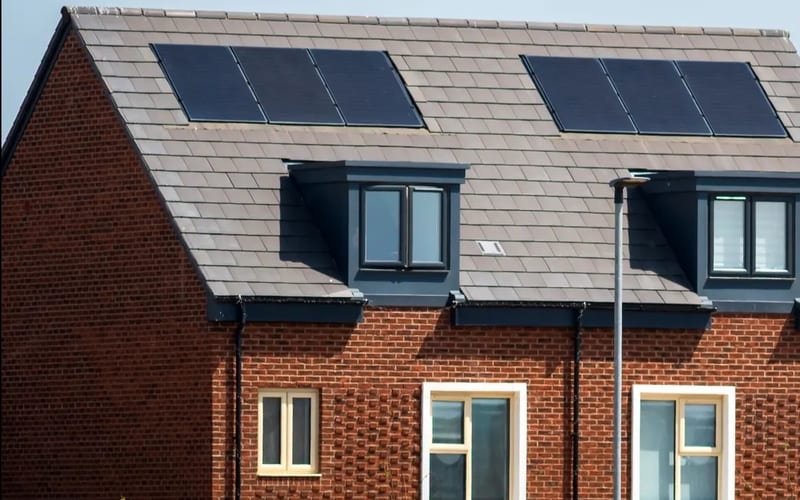
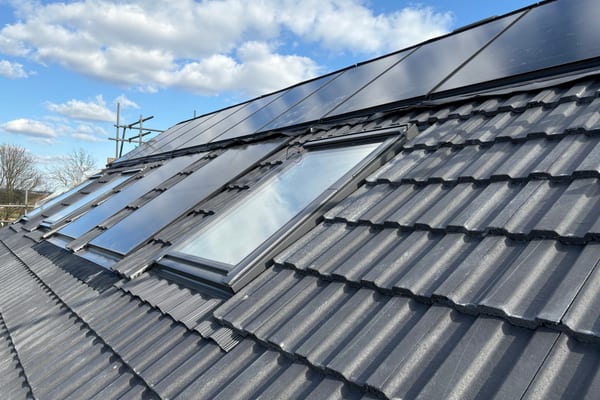
Panels on the roof turn daylight into electricity, which you use first in the house. Anything left over charges a battery if you have one, or goes to the grid for export payments. A well-designed system on a South Coast roof produces a useful amount even in winter and a lot in summer. Panels last 25 years or more.
Solar panel installationBattery storage
A battery stores electricity for when you need it: solar from the middle of the day used in the evening, or cheap off-peak grid power used at peak times. We install Sigenergy SigenStor, a modular system you can grow over time. Batteries can be fitted with new solar or added to panels you already have, and both are 0% VAT until 31 March 2027.
Home battery storageEV chargers
A smart home charger that talks to your solar and battery, so you charge the car from the roof where possible and from a cheap night tariff the rest of the time. We handle the DNO notification, and tell you at the quote stage whether a grant applies.
Home EV charger installationMCS certified. Why it matters.
MCS, the Microgeneration Certification Scheme, is the quality standard for small-scale renewables in the UK. It covers both the products and the installer. Our MCS certificate is issued through the Insulation Assurance Authority (IAA), the same body that audits our insulation work, and it covers solar PV (MIS 3002), battery installation (MIS 3012) and the MCS pre-sale information requirements (MCS 032).
Export payments
Energy suppliers will only pay you for exported electricity under the Smart Export Guarantee if you have an MCS certificate.
Finance and funding
Government schemes and most green finance products require MCS.
Standards
MCS installers work to defined design and installation standards and are audited. Your system is registered, and you get a certificate your solicitor will ask for when you sell.
0% VAT until 31 March 2027
Solar panels, battery storage (whether fitted with solar or on its own) and insulation installed in a home are zero-rated for VAT in Great Britain until 31 March 2027. After that date the rate goes back to 5%. On a typical solar and battery installation that is a meaningful difference, so if you are planning the work, it is worth knowing the date. That is the only deadline we will ever mention to you.
Grants and loans
Eligible low-income households can get fully funded solar and batteries through the Warm Homes: Local Grant, which councils run and which currently has a waiting list in our area. The government's Warm Homes Plan also promises low-interest loans for homeowners of any income, often called the Warm Home Loan; regional schemes have begun to launch, so ask us whether anything is live where you are. We do not offer finance ourselves at the moment.
Warm Homes: Local Grant guideFrequently asked questions
Is my roof suitable for solar?
Most are. South-facing is best, but east and west roofs still produce well, especially with a battery. We look at pitch, shading from trees and chimneys, roof condition and the space available. Flat roofs work with frames. We will tell you honestly if yours does not stack up.
How much do solar panels cost in Hampshire?
As a guide, 3 to 4 kWp of panels on their own is from £5,500 and typically £5,800 to £7,500, and the same system with a battery of about 6 kWh is from £9,500 and typically £10,000 to £12,500. VAT is 0% until 31 March 2027, then 5%. Price depends on panel count, roof complexity, scaffolding and the battery. The full table is on the solar panels page, and we quote in writing after the survey.
Do I need a battery?
Not necessarily. If you are at home during the day and use most of what you generate, panels alone may be the better value. If the house is empty until six, a battery captures the day's solar for the evening and lets you fill up on a cheap night tariff. We will model it from your bills.
What is the Smart Export Guarantee?
A scheme that requires large energy suppliers to pay you for electricity you export to the grid. Rates vary by supplier, so you shop around. You need an MCS certificate and a smart meter. We provide the first; most homes already have the second.
Is there a grant for solar?
For eligible low-income households, solar and batteries can be fully funded under the Warm Homes: Local Grant, which the council runs. For everyone else, there is no grant, but VAT is 0% until 31 March 2027, and regional Warm Home Loan schemes have started to launch. Our Warm Homes guide has the detail.
Start with a free home energy survey
We look at the roof, the consumer unit and a year of bills, then design around how you actually live. Written quote, no pressure.