
Spray foam insulation removal
Spray foam insulation removal is the stripping of polyurethane foam from the underside of a roof, between and over the rafters, so the timbers can be inspected and the loft re-insulated at floor level. It is slow, careful work. Extract Energy removes open-cell and closed-cell spray foam across Hampshire and the South Coast, and tells you honestly what can and cannot be achieved.
Why lenders and surveyors flag spray foam
Spray foam has been sold to a lot of homeowners over the last decade or so as a quick fix for a cold loft. The pitch often left out a few things.
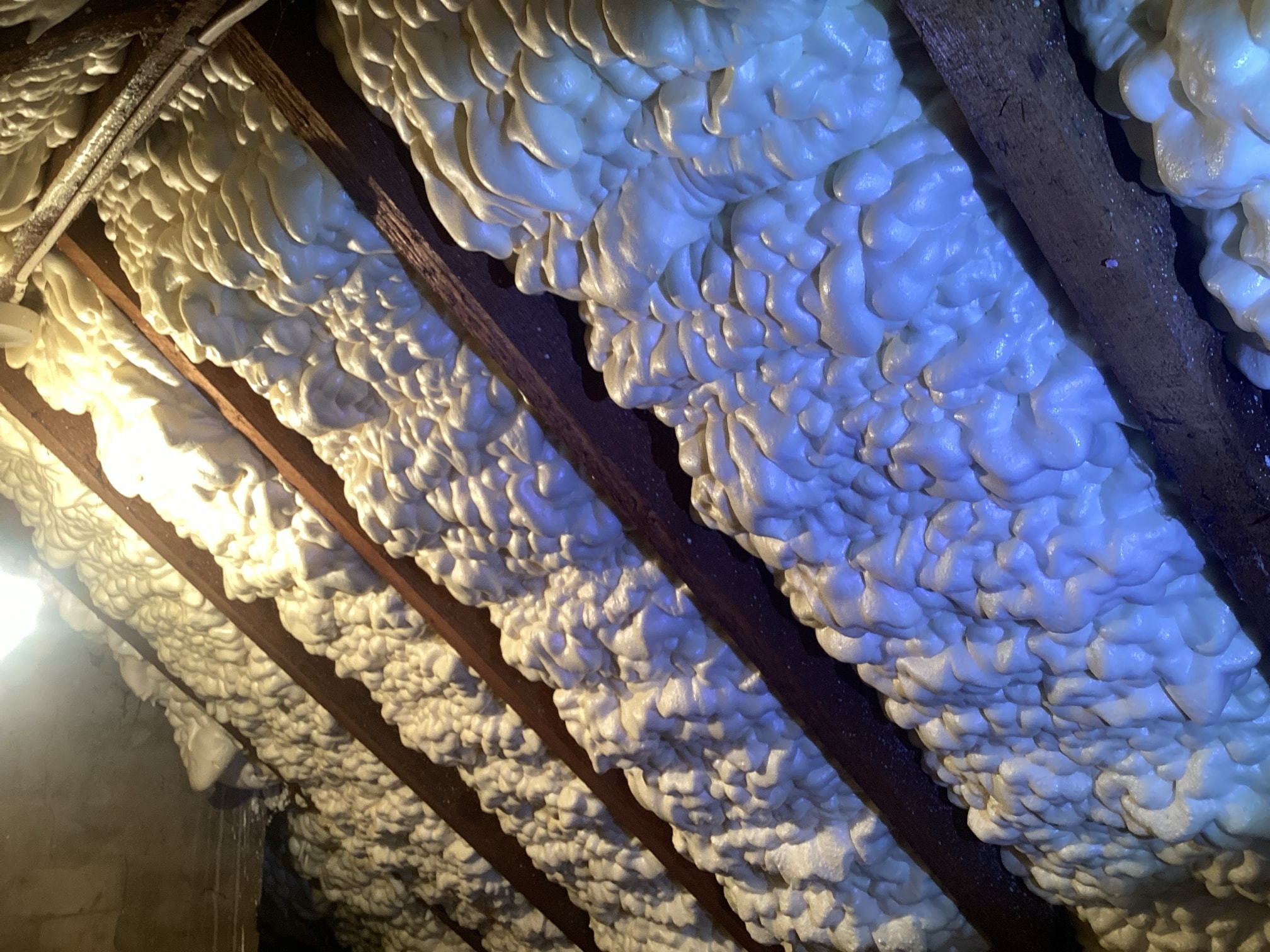
Foam sprayed onto the underside of the roof covers the rafters and the felt completely. A surveyor cannot see the timbers to check their condition. Closed-cell foam can trap moisture against the rafters and the battens, so if the roof ever leaks the wood sits wet with nowhere for the water to go. Open-cell foam is breathable but still hides everything.
As a result, some mortgage lenders will not lend on a house with spray foam in the loft, and others will only lend with a specialist report. Buyers' surveyors flag it routinely. If you are in the middle of a sale or remortgage, check with your lender what they will accept before you commit to anything.
Mortgage and sale risk
Some lenders refuse to lend on properties with spray foam in the loft
Others require a specialist inspection report before proceeding
Buyers' surveyors flag it routinely — it can stall or kill a sale
Closed-cell foam traps moisture against rafters and battens
Open-cell vs closed-cell: what can be removed
Open-cell foam
Soft, spongy and lighter. It can be cut and pulled away from the rafters relatively cleanly, leaving a thin residue that is scraped and brushed back.
Closed-cell foam
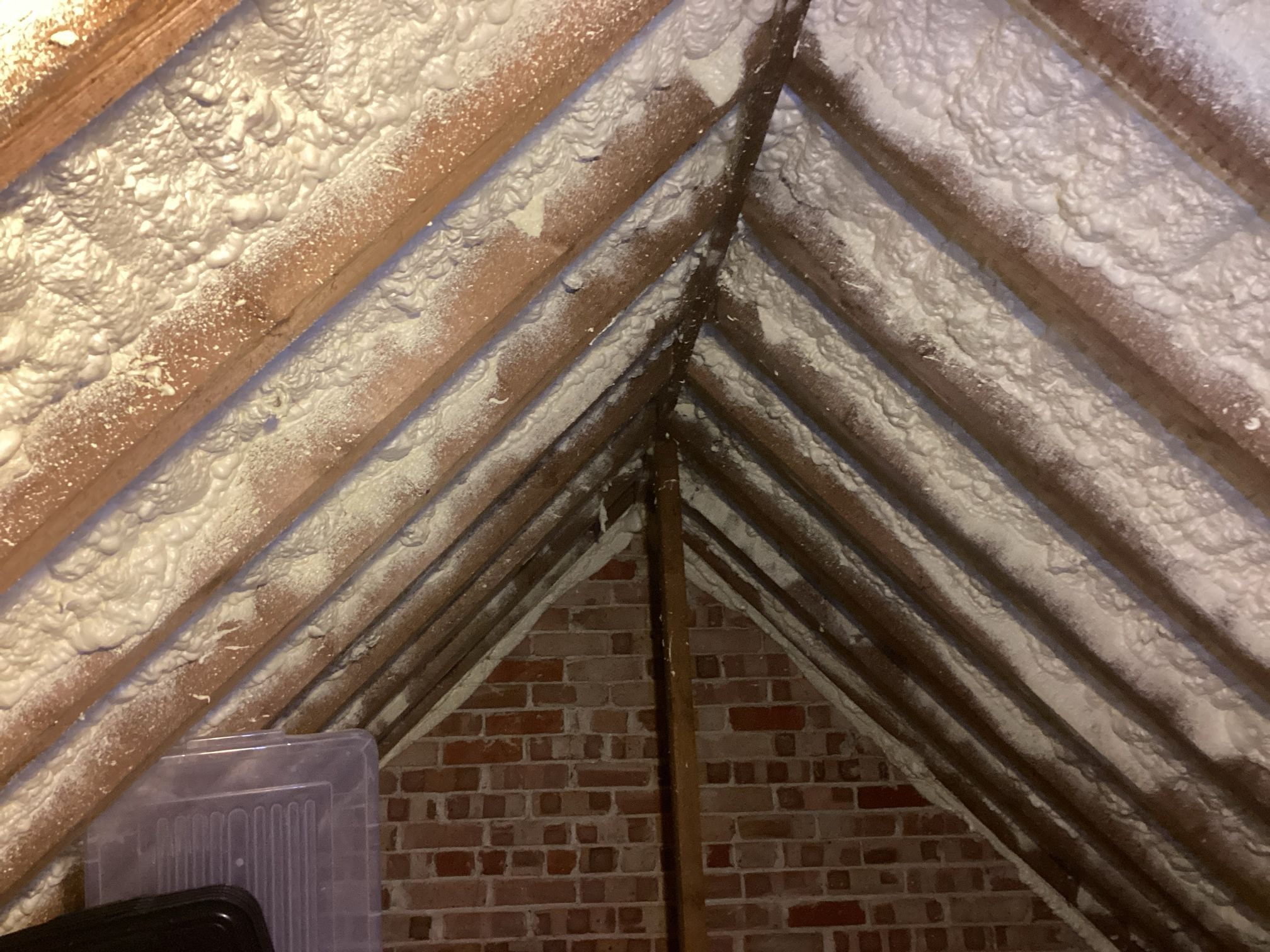
Rigid and dense and bonds very hard to timber and felt. It has to be cut back in sections and then mechanically removed from the timber faces. Some residue nearly always remains in the grain, and the roofing felt is usually damaged or has to be removed with the foam.
We will tell you which you have at the survey and what the realistic finish will look like. With closed-cell foam, "every trace gone" is not an honest promise from anyone.
Our removal process
Survey and report
We inspect the loft, identify the foam type, assess how it was applied, look for signs of moisture or rot where we can, and photograph everything. If you need something for a lender, we give you a written summary of what we found, with photos.
Protect
Dust sheets from the front door up. Hatch sealed. Full PPE and respiratory protection; cutting foam produces fine dust.
Cut and strip
Foam is cut into manageable sections between the rafters and removed. Timber faces are then cleaned back mechanically. Where felt is bonded in, it comes out with the foam.
Inspect the timbers
With the rafters exposed, we photograph their condition. If we find rot or damage we tell you and photograph it; roof repairs are for a roofer, and we can recommend one.
Make good and ventilate
We flag any damaged or missing felt and recommend a roofer, because we do not do roofing. Eaves and lap ventilation is restored so the roof space can breathe again.
Re-insulate at floor level
270mm of Knauf Earthwool on the loft floor, the way it should have been done. Pipes and tank insulated.
Waste away
Everything leaves in sealed bags under waste carrier registration CBDU532168. The full photo pack is available on request.
What it costs
Guide prices for removing spray foam from a typical three-bed roof. Removal is standard-rated, so these prices include VAT at 20%.
| Foam type | Guide price (inc. 20% VAT) |
|---|---|
| Open-cell | from £3,000, typically £3,500 to £6,000 |
| Closed-cell | from £5,500, typically £6,500 to £9,500 |
Larger roofs, and foam that is bonded to the roofing felt, can cost more. Not included: re-insulating the loft floor (typically £800 to £1,100 for a semi, with VAT at 0% until 31 March 2027), repairs to timbers, and pest control. We quote in writing after the survey, and we do not add surprises. Prices as at October 2026.
Full insulation price guideRe-insulating afterwards
A loft with the foam removed and nothing in its place is colder than it was. Nearly every customer has us lay 270mm at joist level on the same visit, with eaves trays and lap vents so the newly exposed roof can dry and stay dry. If you had boards down, we re-fit them raised on legs.
Loft insulation installationCase study: a spray foam clean-up, January 2025
In January 2025 a homeowner called us after another company had been paid thousands of pounds to remove their spray foam, then left the job unfinished. The stripped insulation had been abandoned in heaps across the loft, which left the space unusable and a possible health risk from what was left behind. We assessed the loft, found it full of spray foam debris, and removed the abandoned material. Once it was clear and clean, we installed mineral wool insulation, and we explained each step to the homeowner as we went.
Read the case studyFrequently asked questions
How much does spray foam removal cost?
For a typical three-bed roof, open-cell is from £3,000 and typically £3,500 to £6,000, and closed-cell is from £5,500 and typically £6,500 to £9,500, including VAT at 20%. Roof area, foam type and how much felt comes out with it move the figure. We quote in writing after a free survey.
Can spray foam be fully removed?
Open-cell foam can be removed almost completely. Closed-cell foam can be cut back and the timbers cleaned, but some residue in the grain is normal and any installer who promises otherwise is overselling. The aim is exposed, inspectable rafters, which is what lenders want.
Will removal damage my roof timbers?
Done carefully, no. We cut the foam and clean the timber faces mechanically rather than hacking at them. If the timbers were already damaged by trapped moisture under the foam, we will find that, photograph it and tell you.
Do I need a survey for my mortgage?
Often, yes. Many lenders require a specialist inspection report before they will lend on a property with spray foam, and some will not lend at all until it is removed. We provide a written summary with photographs that you can pass to your lender or surveyor.
Can I get a grant for spray foam removal?
No. There is no grant scheme that funds removal. If you were sold the foam under pressure or with misleading claims, it may be worth speaking to Trading Standards or Citizens Advice, and we can provide our findings to support that.
Sale stuck because of spray foam?
Book a free survey. We will tell you what you have, what it will take to remove, and give you a written report your lender can use.