
Insulation, solar and EV charging in Portsmouth
Portsmouth is across the harbour from our yard and twenty minutes by road round the top. It is also, for cavity wall insulation, one of the most exposed places in our area: an island city with the sea on three sides and little to stop the weather.
Portsmouth's housing and what goes wrong with it
Portea Island is dense and old. Much of Southsea, Fratton, North End and Copnor is Victorian and Edwardian terracing with solid 9-inch walls. These houses do not have cavities and were never suitable for cavity wall insulation, though some were filled anyway where a surveyor mistook a later rendered facade for a cavity wall. We check with a borescope before we touch anything; honesty about suitability matters more here than anywhere.
The cavity-walled stock is mainly on the mainland side: 1930s semis in Cosham, Drayton and Farlington, post-war estates in Paulsgrove and Wymering, and the 1960s to 80s housing on Hayling Island and in Anchorage Park. Hilsea and Baffins are a mix.
Exposure is the issue. Southsea seafront, Eastney and the whole of Hayling Island are among the most exposed parts of the region for wind-driven rain. Mineral wool in a west-facing Hayling gable has very little chance of staying dry. Where we extract it and the wall is sound, we re-fill with bonded bead, which drains rather than holds water.
What Portsmouth homes typically need
- Cavity wall insulation removal in Cosham, Drayton, Paulsgrove and Hayling Island.
- Independent cavity inspections for home buyers whose surveyor has flagged the insulation, common in Portsmouth's busy sales market.
- Loft insulation across the 1930s semis of Cosham and Drayton, where lofts are often still at 100mm.
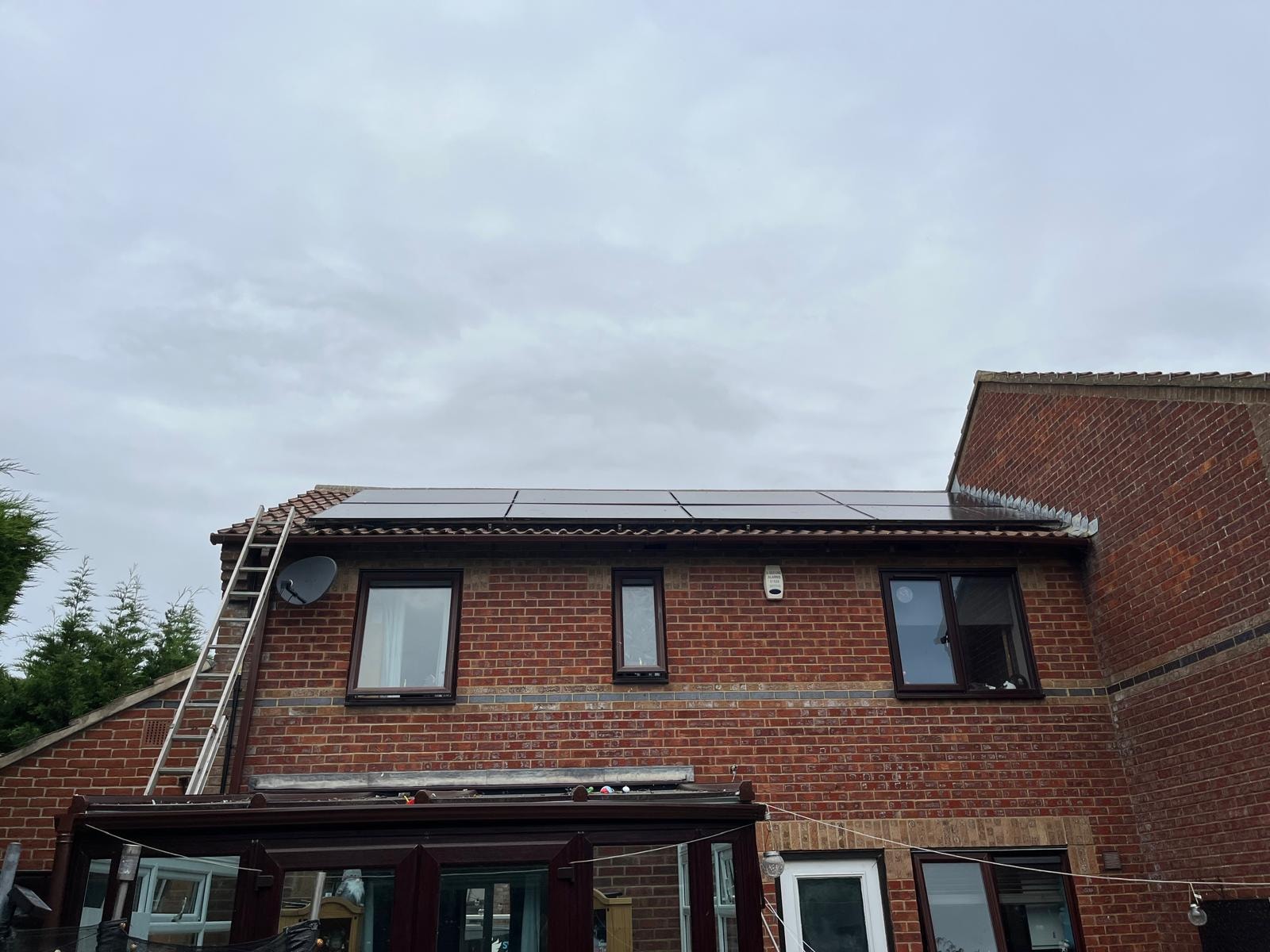
- Solar panels and EV chargers. Drayton, Farlington and Hayling have driveways and simple roofs that suit both.
Typical Portsmouth houses and what we usually look for
This is general local knowledge about the houses, not a list of finished jobs.
1930s semis in Cosham, Drayton and Farlington
Proper cavities, some filled and some not. We look for failed fill on the exposed gables.
1970s detached houses on Hayling Island
West-facing walls take the worst of the weather, which is where wet fibre is most likely.
Southsea and Portsea Island terraces
Mostly solid walls with no cavity at all. If you are buying one and a surveyor has mentioned cavity wall insulation, a borescope check can settle it.
Grants in Portsmouth
Portsmouth City Council is the lead authority for the consortium that runs the Warm Homes: Local Grant locally as Warmer Homes, operated by Agility Eco. It is currently oversubscribed, with a waiting list. 986 Portsmouth postcodes are on the government's eligible list, concentrated in PO6 4, PO6 3, PO1 4, PO5 4 and PO2 7. We have applied to join the Warmer Homes installer network and are not confirmed on it yet.
Warm Homes: Local Grant guideNow open
Warm Homes Loan — solar and battery finance
The Warm Homes Loan Scheme opened on 27 October 2026. It gives homeowners a lower-interest loan — up to £15,000 for solar panels and a further £15,000 for battery storage. No means test. We provide the written MCS quote a lender needs; you apply to a participating lender and we install once funding is confirmed.
Get a lender-ready quotePortsmouth FAQs
My Southsea terrace has damp. Is it the cavity wall insulation?
Possibly not. Many Southsea terraces are solid-walled and have no cavity at all; the damp is usually penetrating or rising damp, or condensation. We will tell you honestly at the survey, and if it is not a job for us we will say so.
Which parts of Portsmouth have cavity walls?
Cosham, Drayton, Farlington, Paulsgrove, Wymering, Anchorage Park, most of Hayling Island, and parts of Hilsea, Baffins and Milton. The older terraces on Portsea Island are mostly solid.